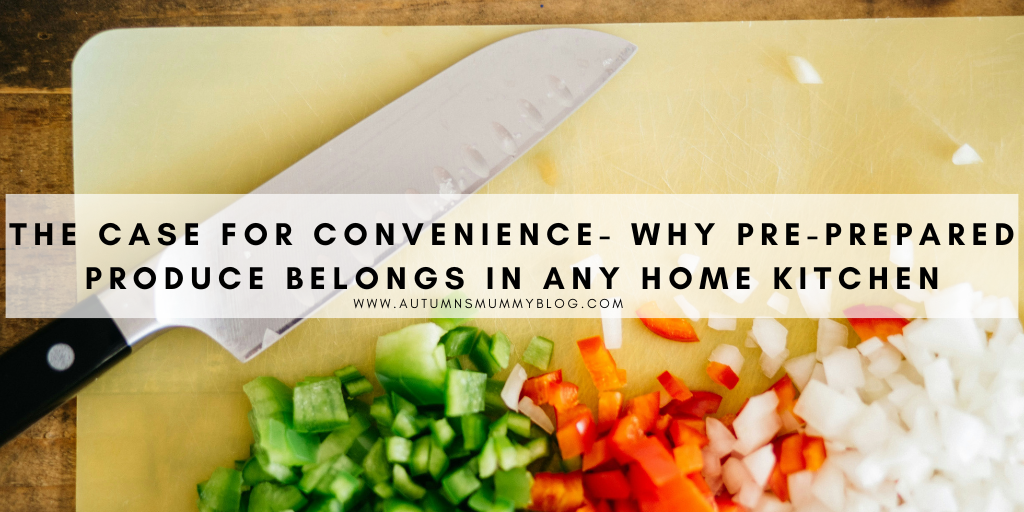
Collaborative Post¦ There is a persistent idea that cooking properly means starting from scratch every time. Whole vegetables, chopped by hand, nothing pre-prepared. It is a reasonable aspiration on a slow Sunday afternoon. It is a less useful standard on a Wednesday evening with homework to oversee and forty minutes before everyone needs to eat. This is where pre-prepared produce comes in. For the right ingredients and the right moments, it is not a shortcut away from good cooking – it is what makes good cooking actually happen.
The Ingredients Where Convenience Makes the Most Sense
Not all pre-prepared produce is equal. The value of buying something ready-prepped depends on how much the preparation step genuinely adds to the outcome. For aromatic base ingredients – onion, garlic, celery, pepper – the answer is usually: not much. These are the ingredients that build flavour into a dish, regardless of whether they were chopped by hand or arrived ready-cut. Taylor Farms onion kits are a good example of a product that removes a genuinely tedious prep step with no meaningful trade-off.
For ingredients where the preparation is part of the pleasure, or where the texture of freshly cut produce makes a noticeable difference to the finished dish, whole is often better. A tomato you slice yourself for a salad is a different thing from one that has been pre-cut.
Convenience Produce and Cooking With Children
One undervalued argument for pre-prepped produce is how it changes the experience of cooking with children. Onion chopping is one of the first tasks excluded from child-friendly cooking – it is fiddly, involves a sharp knife, and produces the kind of eye-watering experience that puts younger cooks off. Having the prep already done means the softening stage, the stirring, the watching the onion turn translucent – the parts children can genuinely be involved in – become the starting point rather than something reached after an adult has finished the difficult bits.
Getting children into the kitchen regularly is worth prioritising, and anything that lowers the friction of doing so consistently is useful.
Store Pre-Prepared Produce Correctly and Use It Promptly
Pre-cut and pre-washed produce has a shorter usable window than whole vegetables because more of its surface area is exposed and its protective outer layer has been removed. The Food Standards Agency recommends refrigerating perishable food promptly – within two hours of purchase – and keeping the fridge between one and five degrees Celsius.
For opened packets of pre-prepared produce, specifically, use within the timeframe indicated on the packaging and do not leave cut vegetables at room temperature for extended periods before cooking. These are small habits that make the difference between convenience produce working well and becoming an expensive source of waste.
The Honest Version of Cooking From Scratch
Cooking from scratch does not mean starting with every ingredient in its most labour-intensive form. It means making real food from real ingredients, with enough control over what goes into it that you know what your family is eating. Pre-prepped produce fits that definition comfortably. The scratch-cooking tradition worth preserving is the one where dinner actually gets made.
Cover photo by Jenna E. on Unsplash
