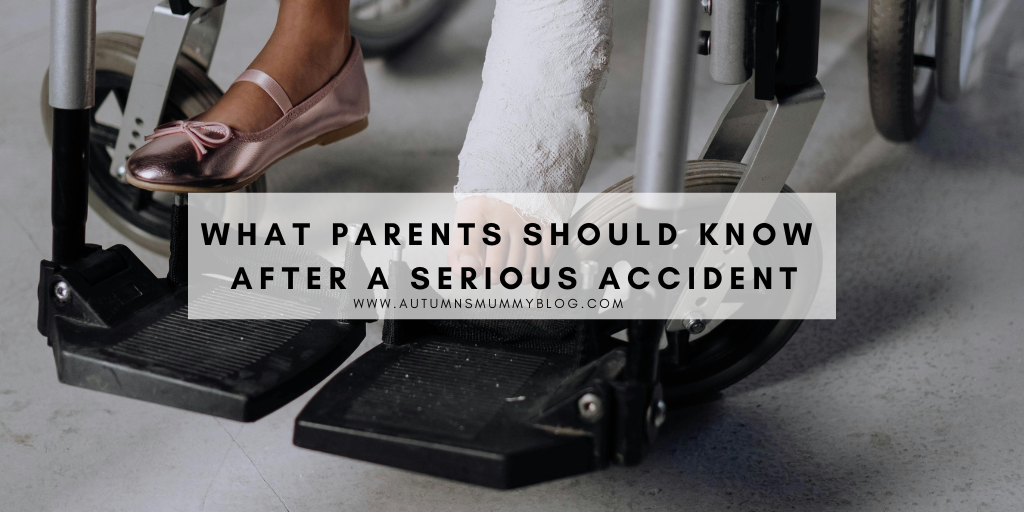
Collaborative Post¦ When a serious accident happens, parents often slip into “keep going” mode. You might be trying to stay calm for your children while dealing with your own injury, shock, or exhaustion. If your child has been hurt, the worry can feel relentless, especially when you are waiting for answers and the days are filled with appointments, calls, and paperwork.
In the middle of all that, it can be hard to think clearly about rights, responsibilities, and what support is available. But a little information, at the right time, can help you protect your family’s wellbeing and make decisions with more confidence.
The first few weeks: focus on safety, stability, and records
In the immediate aftermath, the priority is medical care and routine. Children often respond to disruption in ways that are easy to miss: changes in sleep, clinginess, irritability, or becoming unusually quiet. Even if injuries appear to be healing, fear and uncertainty can linger, particularly after frightening events like road collisions or serious falls.
It helps to keep a simple record of what has happened and how it is affecting daily life. That might include hospital letters, GP notes, prescription costs, travel to appointments, and time missed from school or childcare. If you have had to reduce work hours or arrange extra help at home, note that too. These details are hard to reconstruct later, especially when you are running on adrenaline.
If your child is involved, keep school informed. Small adjustments can make a big difference, and teachers can also help spot changes in behaviour that you might not see at home.
Understanding the wider impact on the family
A serious accident rarely affects only one person. Parents can find themselves juggling recovery while also managing childcare, work pressures, and the emotional load of keeping everyone steady. If your child has ongoing symptoms, the uncertainty can be especially difficult. You may be dealing with pain, fatigue, anxiety around travel, or the practical strain of repeated appointments.
It is also common for parents to feel guilty, even when the accident was outside their control. Those feelings can be intense, but they are not a reliable guide to responsibility. What matters is what happened, why it happened, and what support your family needs now.
If you are supporting a child through recovery, do not underestimate your own need for help. Accepting support from friends, family, school, or healthcare professionals is not a sign you are not coping. It is often what makes coping possible.
When to consider legal advice, and what it can achieve
If the accident happened because someone failed to take reasonable care, you may have the option to bring a claim. That can cover more than immediate medical issues. It may include treatment costs, travel expenses, lost earnings, and the practical impact on family life, such as care and support needs.
Many parents worry that exploring a claim will be stressful or confrontational. In practice, a good solicitor should take the weight off your shoulders, explain what matters in plain English, and help you make informed decisions without pressure. If you are looking locally, you may see personal injury solicitors manchester when considering who to speak to. The most important thing is choosing someone experienced in serious injury situations, who understands that your priority is your child’s wellbeing and your family’s stability.
You do not have to navigate this alone
As a parent, you are often the one holding everything together after a serious accident, even while you are still processing what has happened. It is okay to ask for support. Taking advice can help you understand your options, protect your family’s finances, and make decisions with confidence, without adding more stress at a time when you are already stretched.
Cover photo by cottonbro studio: https://www.pexels.com/photo/a-girl-with-orthopedic-cast-sitting-on-a-wheelchair-6191130/
