
“March is magic”: Croatian guide spills the secret behind the country’s most explosive waterfall season
When you picture Croatia, the first image is the beach and the sea.
But, in March, according to locals, there is a picture postcard ready to be sent – with waterfalls.
Toni Hrelja, founder of Croatian villa rental Villsy, shares the best kept secrets on natural wonders.
In March, he says, the country’s waterfalls don’t trickle — they explode.
Following winter snowmelt and weeks of seasonal rainfall, the cascades at Plitvice Lakes National Park and Krka National Park surge with force, transforming elegant ribbons of water into roaring curtains and mist-filled canyons.

Photo: Villsy.com
“Most visitors wait for July and August because they think that’s the best time,” Hrelja says. “But if you want to see the waterfalls at their absolute peak, March is when they’re at their most powerful. The volume of water, the sound, the spray in the air, it’s dramatic.”
While summer brings long queues and crowded boardwalks, early spring visitors often find wide-open viewpoints and cooler hiking conditions.
Three must-see Croatian waterfalls and why March makes them explode
1. Veliki Slap (The Great Waterfall), Plitvice Lakes National Park
At 78 metres, Veliki Slap is the highest waterfall in Croatia and the stunning centerpiece of the world-renowned Plitvice Lakes National Park. It’s the dramatic finale of the Lower Lakes canyon, where the Plitvica stream cascades over a limestone cliff into the Korana river. The park itself has been a UNESCO World Heritage Site since 1979, a maze of 16 terraced lakes connected by over 90 waterfalls.
In spring, the waterfall is at its most powerful, fed by melting snow and seasonal rains. The volume of water transforms the “Great Waterfall” into a thundering spectacle, with a powerful roar and a huge amount of spray that creates a constant rainbow on sunny days. The water levels across the entire park are at their peak in spring, making all 90 waterfalls a sight to behold.

Photo: Unsplash, Ilse
The most practical way to get there is by car. There is parking at all entrances, each with its own designated area. Please note that parking is charged separately at £1.31 per hour.
March Entrance Fee (one-day ticket): £8.73 per adult, free for children up to 7 years old, and £3.49 for children aged 7 to 18.
How to get there: Cheap Ryanair flights from London to Zagreb start from around £40. From there, hire a car – Plitvice Lakes National Park is just a 2.5 hour drive.
2. Skradinski Buk & Roški Slap, Krka National Park
Krka National Park is best reached by car, and there are four entrances to the park. The most practical choice is the Lozovac entrance, but each entrance offers a different experience, so it depends on what you want to visit. You can find the key details for all entrances on the park’s official website.
Krka is known for two main waterfall areas: Skradinski Buk, the park’s most famous series of cascades, and Roški Slap, known for its main drop and smaller “Necklaces” cascades. In spring, the waterfalls are especially powerful due to rainfall and snowmelt.

Photo: Villsy.com
March is much quieter than July and August, so Krka’s best viewpoints are easier to access for sightseeing and photos.
Visitors can also take a boat trip to Visovac, a small island on the Krka River known for its historic Franciscan monastery, from Skradinski Buk or Roški Slap (around 2 hours, approx. £13).
March Entrance Fee: £6.14 per adult, free for children up to 7 years old, and £3.49 for children aged 7 to 18.
How to get there: Cheap Ryanair flights from London to Zagreb start from around £40. From there, hire a car — Krka National Park is around a 3-hour drive.
3. Slap Sopot, Istria
Why it’s a must-see: A true hidden gem of central Istria, Slap Sopot is an impressive 24.5-meter waterfall that plunges into a stunning turquoise pool. Located near the village of Floričići, it offers a more secluded and intimate experience — unlike the previous two waterfalls, this one is ideal for visitors who prefer a quieter spot with fewer people.
You can park the car right above the waterfall and enjoy the view from an old stone bridge. For a more impressive perspective, a short but steep path leads down to the base of the falla.
The experience at Sopot changes dramatically with the seasons. In summer, it can shrink to a gentle trickle, but in spring, it becomes a powerful cascade. The increased water flow transforms it into a full waterfall, filling the basin below with a deep turquoise colour.
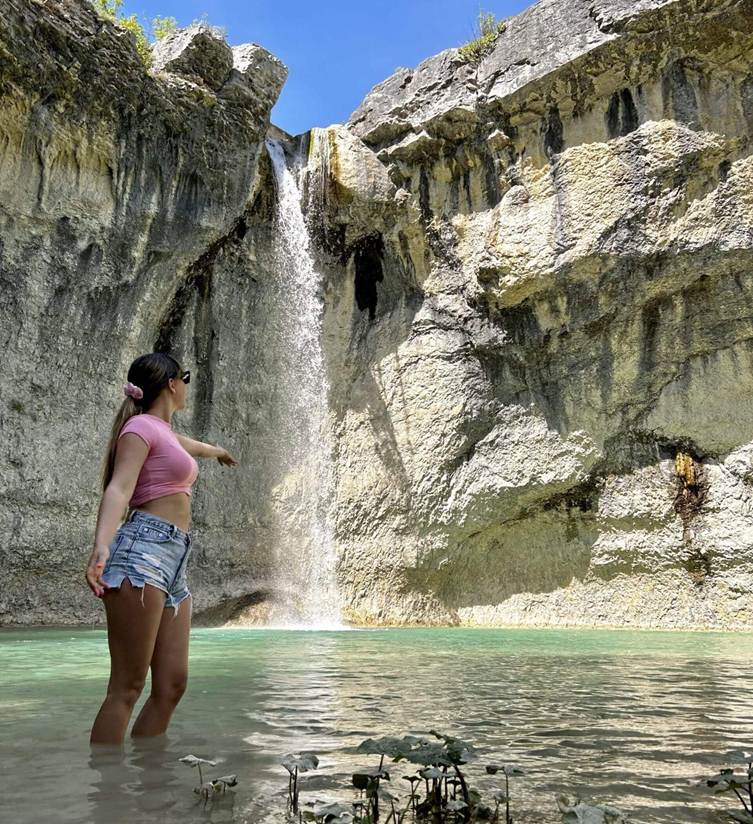
Photo: Villsy.com
While the water is always very cold, a swim is possible on warmer days. When the water is lower, you can sit on the smooth brown stones by the river, but the sight of the waterfall in its full spring power is truly a more magnificent spectacle.
Entrance Fee: Free.
How to get there: Cheap Ryanair flights from London to Zagreb start from around £40. From there, hire a car — Slap Sopot, in central Istria, is around a 2.5-hour drive.